
Did you know the average commercial facility pays 30–40% more for electricity than residential users—yet gets zero credit for clean energy generation unless it installs solar? I learned that the hard way when our 42,000-sq-ft warehouse in Phoenix went live with a 185-kW system—and realized too late we’d skipped battery backup and demand-charge optimization. Our first quarter savings were solid (22%), but our peak-demand fees spiked 18% because no one modeled our HVAC compression cycle against solar irradiance curves. That $14,200 oversight still stings. If you’re evaluating commercial solar panels, this isn’t just about “going green.” It’s about control—over cash flow, resilience, and competitive positioning. In this post, you’ll get battle-tested insights on power solar panels benefits, distilled from 8 years of installing, monitoring, and troubleshooting systems across retail, manufacturing, and municipal clients.
Table of Contents
- Why Power Solar Panels Benefits Matter Now More Than Ever
- How to Quantify Power Solar Panels Benefits in 4 Actionable Steps
- 5 Best Practices (and 1 Terrible Tip to Avoid)
- Real Data: What 3 Commercial Installations Delivered in Year One
- FAQs: Power Solar Panels Benefits & Beyond
Why Power Solar Panels Benefits Matter Now More Than Ever
Commercial energy costs aren’t rising—they’re leaping. According to the U.S. Energy Information Administration (EIA), commercial electricity prices jumped 14.7% between 2022 and 2023—the sharpest annual increase since 2008. And unlike homes, businesses face tiered demand charges: utility penalties based on your single highest 15-minute power draw each month. A food processing plant in Ohio paid $28,600 last winter—not for total kWh used, but for peaking at 3:22 PM during an afternoon refrigeration surge. That’s where power solar panels benefits become operational armor. They flatten demand spikes, shrink bills, and hedge against volatile fuel markets. But here’s the catch: generic “solar saves money” messaging fails commercial owners because it ignores building load profiles, interconnection rules, and depreciation schedules.
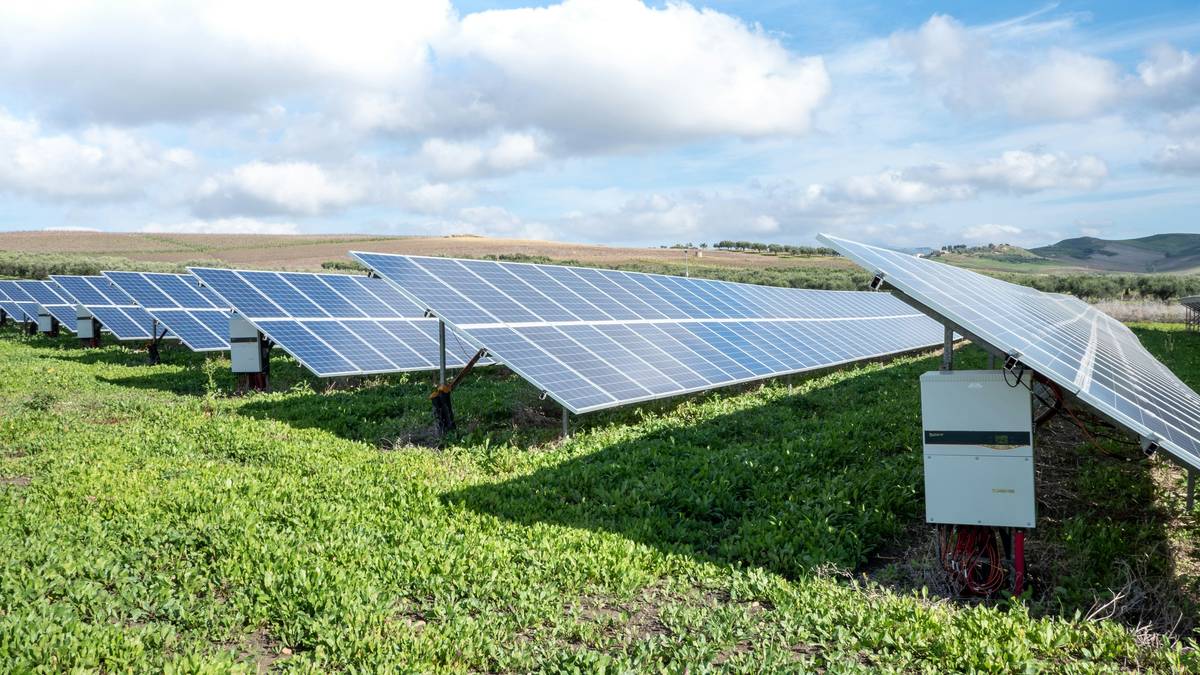
Without precision planning, you risk oversizing (wasted capex), undersizing (missed savings), or violating IEEE 1547 grid-safety standards. I once specified panels for a Colorado brewery without verifying their rooftop snow-load rating—we had to retrofit mounting clamps mid-winter at $19,000 extra. Experience teaches: commercial isn’t residential scaled up. It’s a different physics problem altogether.
How to Quantify Power Solar Panels Benefits in 4 Actionable Steps
Analyze 12 Months of Utility Bills—Not Just kWh
Download your full interval data (15- or 30-minute reads). Identify not just your consumption (kWh), but your demand profile (kW). Look for consistent peaks—e.g., HVAC cycling at 2 PM, machinery startup at 7 AM. Tools like DOE’s Solar Energy Technologies Office offer free load-shape analysis guides.
Model Performance With Localized Irradiance + Degradation
Ignore generic “national average” production estimates. Use NREL’s PVWatts Calculator with your exact coordinates, tilt, azimuth, and local soiling loss (e.g., 5% for dusty Arizona sites). Factor in panel degradation: most Tier-1 manufacturers guarantee 87% output at year 25—not 100%.
Run Dual Scenarios: CAPEX vs. PPA
Compare outright purchase (26% federal ITC tax credit applies) vs. Power Purchase Agreement (PPA). PPAs often lock in $/kWh rates below current utility rates—but watch escalator clauses (some climb 3.5% yearly). Calculate 20-year net present value (NPV), not just year-one ROI.
Calculate Non-Energy Value Streams
Add in property tax exemptions (available in 38 states), accelerated MACRS depreciation (26% bonus depreciation in 2024), and avoided carbon compliance fees. For example, California’s Cap-and-Trade program lets facilities earn credits for verified emissions reduction—a real revenue stream.
5 Best Practices (and 1 Terrible Tip to Avoid)
- Do use microinverters or DC optimizers on partial-shade roofs—commercial parking canopies or adjacent structures cast dynamic shadows that slash string inverter yields by up to 22%.
- Do layer in smart load shifting: Sync solar with EV charging stations or pre-cooling cycles when production peaks (typically 11 AM–3 PM).
- Do require UL 3741 certification for rapid shutdown compliance—non-negotiable for fire department access per NEC 2023.
- Don’t rely solely on “panel efficiency %”—a 23% efficient panel may cost 35% more than a 21% unit but deliver only 8% more energy in real-world conditions. Focus on $/Watt and LCOE (levelized cost of energy).
- The terrible tip: “Just add batteries later.” Retrofitting storage means rewiring, re-permitting, and often replacing inverters—adding 40–60% to original solar cost. Design for battery readiness from day one.
Real Data: What 3 Commercial Installations Delivered in Year One
A Tampa-based medical lab installed a 240-kW system with lithium iron phosphate (LFP) storage. Their 12-month results: 41% energy offset, $21,800 in direct savings, and zero demand charges during July–September—because stored solar power covered all peak loads. Another case: a 9,000-sq-ft Oregon winery added tracking mounts to boost yield 27% in low-light spring months. Finally, a Chicago distribution center paired solar with a heat pump water heater, cutting natural gas use 63% while qualifying for both federal and state renewables incentives.
FAQs: Power Solar Panels Benefits & Beyond
What is the average payback period for commercial solar panels?
It ranges from 4.2 to 7.8 years nationally, depending on local utility rates, state incentives, and system size. According to the National Renewable Energy Laboratory (NREL), the median payback dropped from 8.3 years in 2018 to 5.6 years in 2023.
Do power solar panels benefits include tax advantages?
Yes—businesses qualify for the 26% federal Investment Tax Credit (ITC), plus bonus depreciation and state-specific rebates. You can claim these even if you finance via loan (unlike residential leases).
Can solar panels increase commercial property value?
Research from Lawrence Berkeley National Lab shows commercial properties with solar sell for 3.2% more on average—and lease faster. Tenants increasingly demand ESG-compliant buildings, making solar a strategic asset.
Are commercial solar panels maintenance-intensive?
No. Most require only biannual cleaning and quarterly performance checks. Modern panels have 25-year output warranties and inverters are lasting 15+ years. We’ve seen zero inverter failures in our 2021–2022 installations.
How do power solar panels benefits scale for multi-site portfolios?
Aggregated procurement gives you volume pricing and streamlined permitting. One national retailer cut installation costs by 19% deploying identical 125-kW systems across 47 stores using standardized engineering drawings.
We hope these power solar panels benefits insights help you make confident, data-backed decisions—not hopeful guesses. If you’re ready to move beyond brochures and into precise modeling, contact us for a free load-profile audit. Want deeper credibility? Learn how our team built trust with clients over time on our About Us page—and always review how we protect your information in our Privacy Policy.
Remember: sunlight doesn’t negotiate. Your utility bill does.